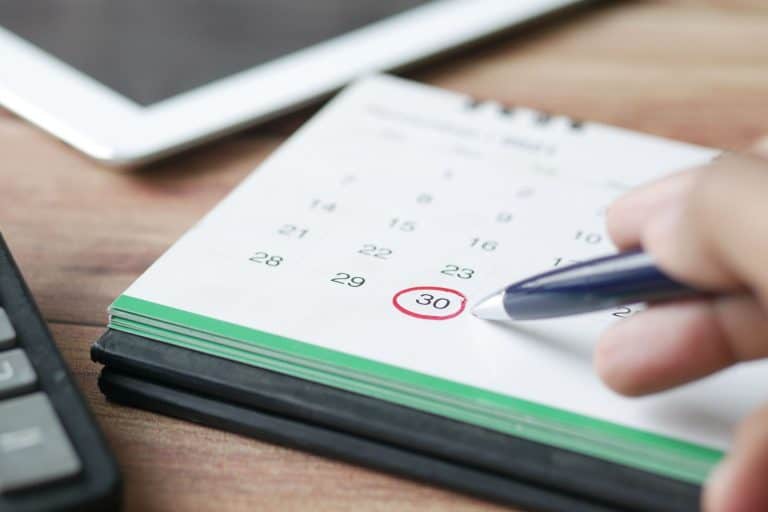

The end of the tax year – 5 April – arrives at the same point every year, which means the stress that many business owners associate with it is almost entirely avoidable. It is not the deadline itself that creates difficulty. It is the combination of incomplete records, decisions left unmade, and planning left undone that turns a predictable event into an annual scramble.
This article is about getting ahead of it. Not everything on the list below will be relevant to every business, but working through it before the year end – rather than in the weeks after it – tends to produce a better tax position, a smoother accounts preparation process, and considerably less pressure on everyone involved.
Start Earlier Than You Think You Need To
The most useful thing to know about year-end preparation is that the window for action closes earlier than most people realise. Many of the decisions that affect this year’s tax position need to be made before 5 April, not after it. Once the tax year has ended, the options narrow significantly.
A review in January or February gives enough time to act on what it reveals. A review in April, after the year has closed, is largely an exercise in recording what happened rather than influencing it. The earlier the preparation starts, the more useful it tends to be.
Get Your Records in Order
The foundation of a smooth year end is records that are current, complete, and organised. If bookkeeping has fallen behind during the year, now is the time to catch up – not in January when the Self Assessment deadline is approaching and the accountant is busiest.
Specifically, it is worth making sure the following are in order before the year closes:
- All sales invoices raised and income received during the year are recorded
- All business expenses have been captured, with receipts or invoices to support them
- The bank account has been reconciled up to a recent date
- Any outstanding invoices owed to the business are identified and the likelihood of collection is assessed
- Directors’ loan accounts, if relevant, are reconciled and any overdrawn balance is understood
- Mileage records are up to date if mileage is being claimed as an expense
Records that are in good order before the year ends allow the accountant to work efficiently and accurately. Records that need to be reconstructed after the fact take longer, cost more in accountancy time, and carry a greater risk of something being missed.
Review Your Expenses Before the Year Closes
Year end is a natural point to review whether all legitimate business expenses have been captured. The most commonly overlooked categories are:
- Use of home as office, for sole traders and limited company directors working from home
- Mileage for business travel in a personal vehicle, where the HMRC approved rates apply
- Subscriptions, software licences, and professional memberships that are genuinely business-related
- Training and professional development costs directly relevant to the business
- Equipment purchases made during the year, which may qualify for capital allowances
It is also worth reviewing whether any significant purchases are planned in the near future. Bringing a purchase forward before the tax year ends – if it makes commercial sense to do so – may allow the expenditure to reduce this year’s taxable profit rather than next year’s.
Think About Pension Contributions
Pension contributions made by a business are generally an allowable deduction against taxable profit, and contributions made personally can attract income tax relief at the contributor’s marginal rate. Both represent meaningful tax efficiency when used appropriately.
For limited company directors, employer pension contributions paid by the company before the year end reduce the company’s Corporation Tax liability for that year. The contribution must actually be paid before the year end – an intention to pay does not qualify. For sole traders, personal pension contributions paid during the tax year reduce the taxable income figure on the Self Assessment return.
The annual allowance for pension contributions is currently £60,000, subject to the individual’s earned income for the year. Unused allowance from the previous three tax years may also be available through carry forward. If pension contributions are not already part of the year-end planning conversation, they should be.
Consider the Timing of Income and Expenditure
For businesses that have some flexibility over the timing of income recognition or expenditure, the period around the tax year end is worth thinking about carefully.
If taxable profit this year is unusually high – perhaps due to a one-off project or an exceptional item – it may be worth considering whether any planned expenditure can be brought forward into this tax year to offset some of that profit. Conversely, if profit is lower than usual and is expected to be higher next year, deferring income where possible keeps it in the higher-rate year where it does less damage.
These decisions are not always straightforward and need to be considered in the context of the business’s overall financial position, its cash flow, and its commercial priorities. They are also most usefully made with an accountant who knows the full picture rather than in isolation.
Check Your Dividend Position if You Run a Limited Company
For directors of limited companies who take income through dividends, the period before 5 April is a useful moment to review the dividend position for the year.
The dividend allowance – the amount of dividend income that can be received without income tax – is currently £500 per year. Income above that is taxed at rates that depend on the individual’s overall income level. Reviewing whether dividends taken to date have been optimised, and whether a further dividend before the year end makes sense, is a routine part of year-end planning for owner-managed companies.
It is also worth confirming that dividends have been properly documented – board minutes recording the declaration, dividend vouchers issued to shareholders – since undocumented dividends can be reclassified as salary by HMRC, with different tax and National Insurance consequences.
Talk to Your Accountant Before the Year Closes
The most consistent piece of advice for year-end preparation is to have the conversation with your accountant before the year ends, not after. A brief call or meeting in February or March – focused on where the year is likely to land and what, if anything, can still be done to influence the outcome – is time well spent.
Once the year has closed, the room for manoeuvre is limited. The return becomes a recording exercise rather than a planning one. The decisions that could have been made are no longer available. The accountant who knows what is coming can help; the accountant who only sees the position in retrospect can only report it.
Getting ahead of the year end is not complicated. It is a matter of treating it as the predictable event it is, giving it attention while there is still time to act, and not leaving the preparation to a point where the options have already closed.
If you would like to talk through your year-end position before 5 April – or make sure you are not missing anything worth acting on – get in touch with the team at Atria. It is exactly the kind of conversation that is worth having earlier rather than later.
This article reflects tax rules and allowances as at June 2026, including the pension annual allowance of £60,000 and the dividend allowance of £500. Allowances and rules are subject to change. This article does not constitute legal or financial advice. For guidance specific to your circumstances, please speak to a qualified professional.